Best Skincare Ingredients for Menopausal Skin


Area
Daily UseKey Takeaways:
- Prioritize Humectants: Ingredients like Urea and Hyaluronic Acid are essential for drawing moisture into thinned skin layers.
- Strengthen with Ceramides: Think of these as the “mortar” between your skin cells; they are vital for repairing a “leaky” menopausal barrier.
- Avoid Harsh Surfactants: Traditional soaps and SLS can strip the very few natural oils your skin is still producing.
- Less is More: Focus on a few high-quality, tested ingredients rather than a complex 10-step routine that risks irritation.
When estrogen levels drop, the “rules” of skincare change. The high-strength acids or foaming cleansers that worked in your 30s can suddenly feel like sandpaper on a thinning, menopausal barrier. Navigating the sea of “anti-aging” marketing is difficult, but the secret to radiant skin during this transition isn’t a miracle cure, it is about choosing ingredients that support your skin’s changing biology.
We focus on ingredients that are clinically tested to restore what menopause takes away: moisture, lipids, and structural integrity. Here is your guide to the essential ingredients your skin needs right now and which ones you should leave on the shelf.
Why is Urea the “Gold Standard” for menopausal skin?
Urea is a naturally occurring part of our skin’s Natural Moisturising Factor (NMF), but its levels decrease significantly as we age. For menopausal skin, Urea is a key ingredient because it serves two functions: it is a humectant (drawing water in) and a keratolytic (gently softening rough, dead skin).
Unlike harsh chemical exfoliants, Urea encourages cell turnover without compromising the barrier, making it perfect for the “crepey” texture often seen during this stage. To see how Urea fits into a broader routine, visit our Menopause & Skincare Guide and our urea in skincare guide.
Which ingredients help repair a “leaky” skin barrier?
As estrogen declines, your skin produces fewer ceramides, fatty acids, and cholesterol. This creates a “leaky” barrier where moisture escapes and irritants enter. To manage this, you need “biomimetic” ingredients, substances that mimic the skin’s natural composition.
- Ceramides: Essential for sealing the gaps between skin cells to prevent dehydration.
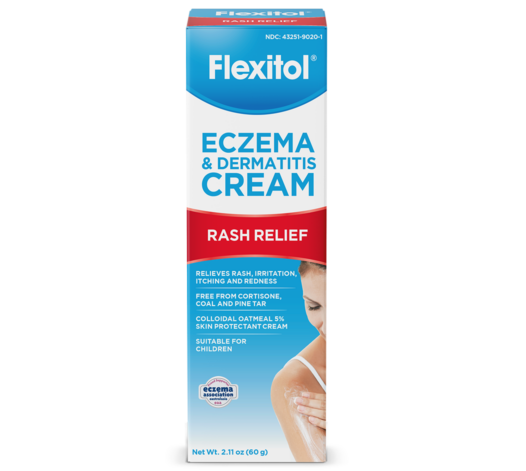
- Colloidal Oatmeal: A tested anti-inflammatory that calms the “prickly” or itchy sensations common in menopause.
- Vitamin B5 (Panthenol): Acts as a soothing agent to reduce the redness associated with “inflammaging.”
If your barrier feels particularly reactive, you may want to read our deep dive on Sensitive Skin During Menopause: Causes, Triggers and Care Tips.
What ingredients should you avoid during the menopausal transition?
Because the skin is thinner and the nerve endings are more exposed, certain popular ingredients can become “triggers” for inflammation.
- High-strength Retinols: While great for collagen, standard retinols can be too aggressive for thinned menopausal skin, leading to peeling and “retinol burn.”
- Alcohol-based Toners: These dry out the surface, making itchy skin even worse.
- Synthetic Fragrances: A leading cause of contact dermatitis in reactive skin.
- Physical Scrubs: Gritty exfoliants can cause micro-tears in fragile skin.
For those managing specific flare-ups caused by these irritants, refer to Menopause, Eczema and Psoriasis: Why Flare-Ups Can Worsen.
How do you build a routine that actually works?
The best routine for menopausal skin focuses on “saturation and seal.” You want to saturate the skin with water-binding ingredients (humectants) and then seal that moisture in with an occlusive layer. This is the most effective way to manage the chronic dryness (xerosis) that defines this life stage. For more on managing the physical discomfort of dryness, see Why Menopause Causes Dry, Itchy Skin (And What Helps).
The Flexitol Ingredient-Led Menopause Skincare Routine
Our skincare range is designed to deliver high concentrations of these essential ingredients in a way that is gentle on thinned skin.
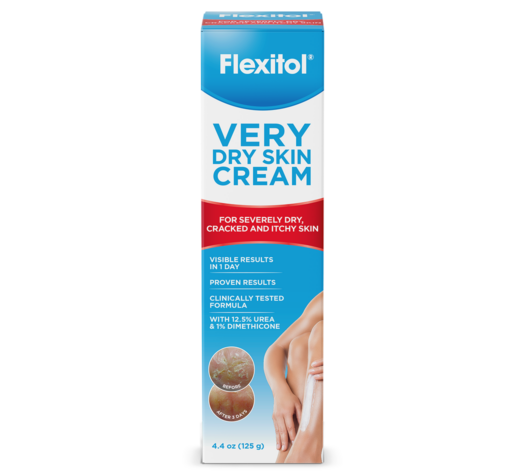
- Urea in Skincare: Flexitol Very Dry Skin Cream contains 12.5% Urea and is clinically tested to provide intensive hydration for even the most stubborn dry patches.
- The Barrier Repairer: Flexitol Face & Eyelid Eczema Cream uses a combination of soothing agents to support the delicate facial barrier without the use of steroids.