Menopause Skincare Guide


Area
Daily UseKey Takeaways:
- Collagen decline is rapid: Skin can lose up to 30% of its collagen in the first five years of menopause, leading to increased thinning and sagging.
- Hydration is non-negotiable: Dropping estrogen levels mean less natural oil production, making intensive, clinically tested moisturizers essential.
- Sensitivity increases: A weakening skin barrier makes you more reactive to ingredients that never used to be an issue.
- Targeted ingredients matter: Look for urea, ceramides, and glycerin to support the barrier and lock in moisture.
Menopause is a significant biological milestone, but the conversation often focuses on hot flushes and sleep without addressing one of the most visible shifts: your skin. Because estrogen plays a vital role in collagen production and moisture retention, the hormonal transition can leave skin feeling unrecognizable.
At Flexitol, we believe in science-backed skincare that actually works. Understanding menopausal skin changes is the first step toward reclaiming your comfort and confidence.
Why does menopause affect your skin so significantly?
The primary driver behind skin changes during menopause is the decline in estrogen. Estrogen is the primary hormone for skin health; it stimulates the production of collagen, elastin, and hyaluronic acid. It also helps maintain the skin’s protective oil barrier.
As levels drop, the skin’s ability to retain water diminishes. This often results in a “crepey” texture and a noticeable loss of elasticity. This hormonal shift doesn’t just affect the face, it impacts the skin from head to toe, often leading to a systemic feeling of dryness. For a deeper dive into the science of moisture loss, you can read our guide on Why Menopause Causes Dry, Itchy Skin (And What Helps).
How do you manage the sudden onset of sensitivity?
If you’ve noticed your skin becoming red, itchy, or reactive to your usual products, you aren’t alone. Menopause skin problems often include a compromised skin barrier. When the barrier is thin, environmental irritants and allergens can penetrate more easily, causing inflammation.
Managing this requires a “less is more” approach. Swapping harsh foaming cleansers for soap-free alternatives and avoiding heavy fragrances can make a world of difference. To learn how to identify your new triggers, explore our article on Sensitive Skin During Menopause: Causes, Triggers and Care Tips.
What happens when menopause meets existing skin conditions?
For those who have previously dealt with inflammatory conditions, the menopausal transition can be a catalyst for renewed frustration. The combination of thinner skin and increased dryness often means that Menopause, Eczema and Psoriasis flare-ups can worsen.
Without the protective cushion of healthy oil production, the “itch-scratch cycle” becomes harder to break. Supporting the skin barrier with medical-grade emollients is crucial during this time to maintain comfort. You can find specific management strategies in our article: Menopause, Eczema and Psoriasis: Why Flare-Ups Can Worsen.
Which skincare ingredients actually work for menopausal skin?
The market is flooded with anti-ageing claims, but menopausal skin has specific physiological needs that standard “anti-wrinkle” creams may not address. Because the skin is thinner and more fragile, you need ingredients that provide intensive nourishment without irritation.
Key ingredients to look for include:
- Urea: A gold-standard keratolytic that draws moisture into the skin.
- Ceramides: The “glue” that holds skin cells together to support the barrier.
- Vitamin B5 (Panthenol): Excellent for soothing reactive areas.
To build the perfect routine, check out our breakdown of the Best Skincare Ingredients for Menopausal Skin (And What to Avoid).
What’s The Flexitol Menopause Routine?
Managing how menopause affects skin requires clinically tested formulations that go beyond surface-level hydration. Here are our top recommendations:
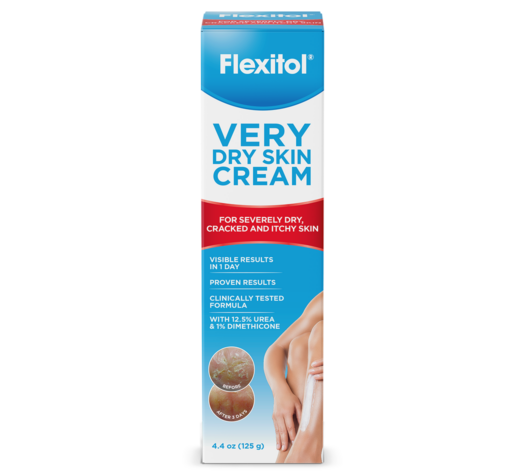
- For Body Hydration: Flexitol Very Dry Skin Cream is formulated with 12.5% Urea and 1% Dimethicone. It is clinically tested to provide intensive hydration and support the skin barrier.
- For Face and Neck: Flexitol Face & Eyelid Eczema Cream is a gentle, steroid-free option perfect for those new patches of sensitivity or “menopause acne” that can appear on delicate facial skin.
- For Chronic Dry Lips: Estrogen loss often leads to thinning skin on the lips. Our Flexitol Lip Balm provides a concentrated formula that softens and protects.